The Builder says construction is complete. The common areas look painted. The lifts are running. The fire extinguishers are hanging on the walls. Everything looks fine.
So the Resident Welfare Association signs the handover papers. Takes charge of common facilities. Starts collecting maintenance. And within months, they discover that the fire-fighting system was never actually turned on, hairline cracks on the basement ceilings and walls. Water is entering from expansion joints that were never properly sealed.
Now it’s the residents’ problem. The Builder has moved on. The maintenance corpus is bleeding. And fixing what should have been done right in the first place costs crores — money that comes out of every flat owner’s pocket.
This is not a hypothetical scenario. This is what we found during a recent RWA HOTO audit of a large residential complex. And the uncomfortable truth is: that is happening in societies across India, right now. The only difference is whether anyone audits before signing.
What Is an RWA HOTO Audit — And Why Does Your Society Need One?
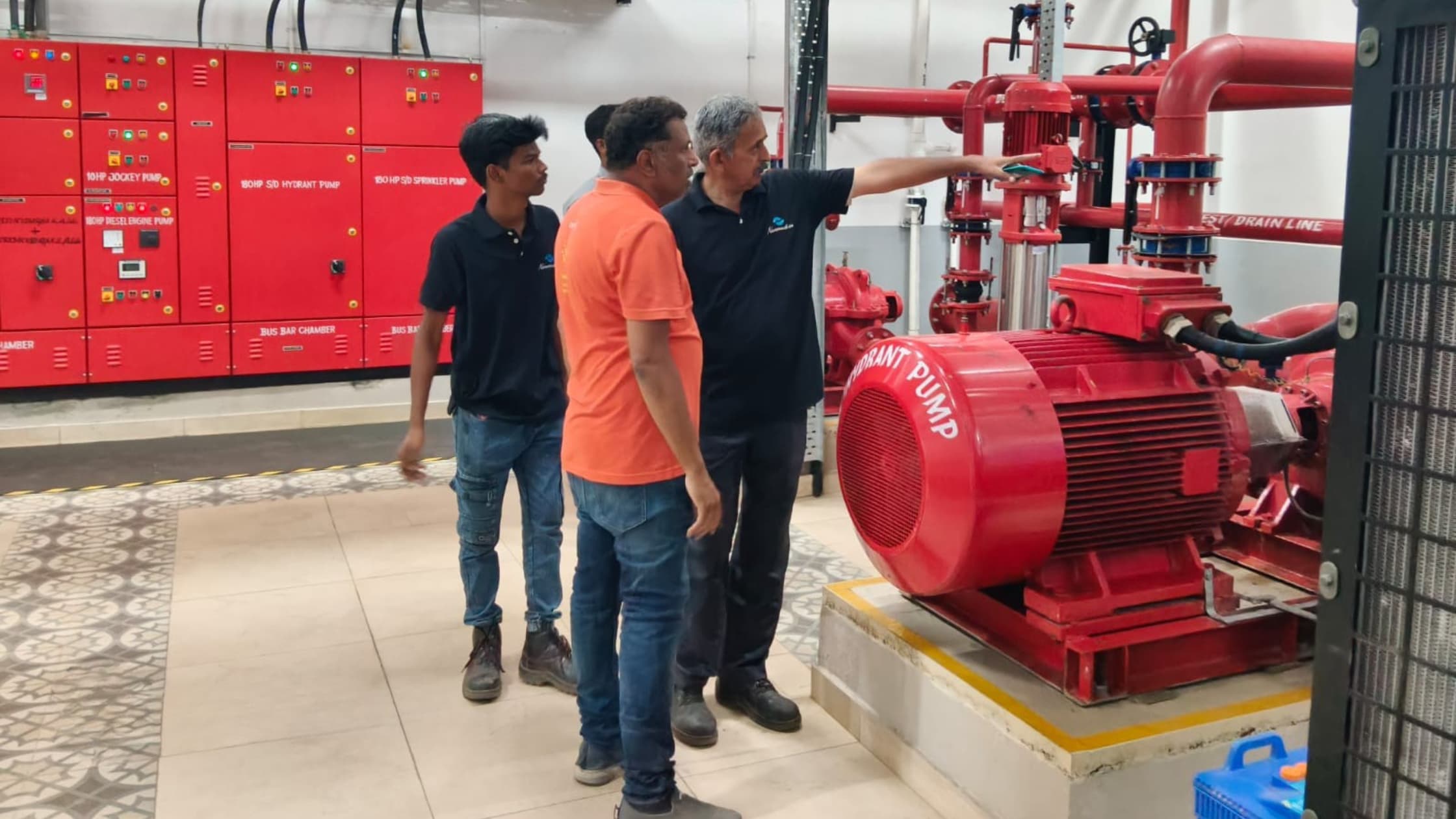
An RWA HOTO audit is an independent, third-party pre-takeover inspection of an apartment society’s common facilities — conducted before the RWA accepts them from the Builder.
Think of it like a vehicle inspection before buying. The seller says everything works. Maybe it does. Maybe it doesn’t. You wouldn’t spend lakhs without getting it checked. So why would a society accept common facilities worth crores without getting them checked by an independent expert?
An RWA HOTO audit doesn’t fix anything. It doesn’t do construction. It doesn’t supervise workers. What it does is tell you — with photographs, code references, and hard data — exactly what condition the building is actually in. Every deficiency. Every code violation. Every system that hasn’t been commissioned. Every crack, leak, and missing component.
That information is your leverage. Before handover, the Builder is responsible for fixing it. After handover, you are. The HOTO audit is the only thing standing between those two realities.
The Handover Trap Most RWAs Fall Into
Here’s how it usually goes.
The Builder calls a meeting. Shows a list of completed items. Walks the RWA committee through the lobby, the parking, and maybe the clubhouse. Everything is painted. The lights are on. It looks done.
The committee members are not engineers. They don’t know what a fire stop is. They don’t know that a sprinkler head with its factory PVC cap still on will never activate in a fire. They don’t know that a basement slab can be permanently damaged by overloading, even if there are no visible cracks.
So they sign. Because it looks ready. Because the Builder says it’s ready. Because they’ve been waiting for years, and they just want it to be over.
And that signature transfers every deficiency — every missing fire door, every unconnected earth wire, every leaking expansion joint — from the Builder’s liability to the residents’ expense.
This is exactly what a pre-takeover inspection of your apartment society is designed to prevent.
What “Ready for Handover” Actually Looked Like in One Recent RWA HOTO Audit
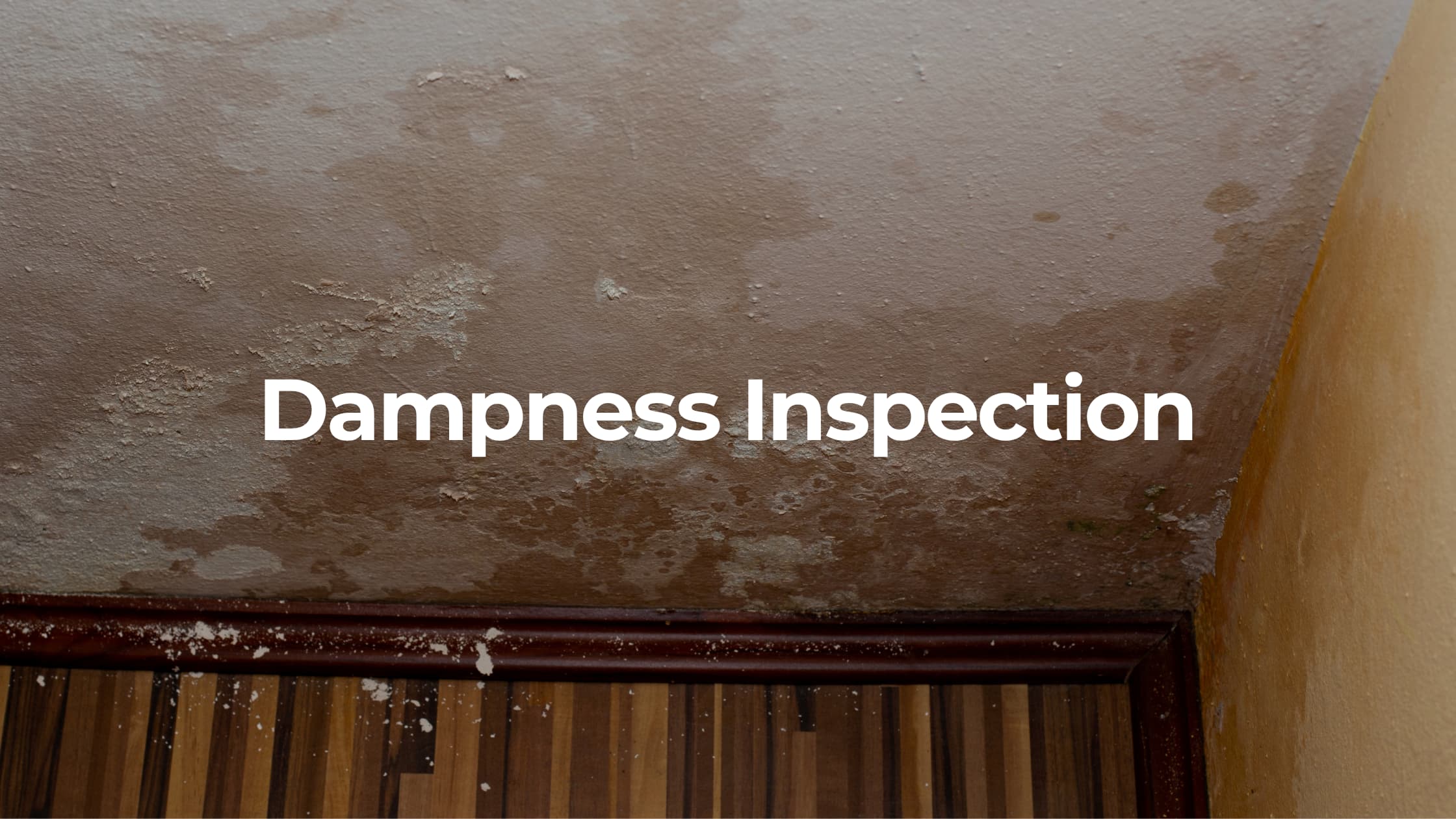
We were engaged by an RWA to conduct a HOTO audit before they accepted common facilities from the Builder. The complex was large — multiple towers, basements, stilt parking, clubhouse, STP, WTP, the full set of shared infrastructure.
The Builder had declared it ready for handover.
We spent eight weeks auditing every shaft, staircase, basement, fire cabinet, electrical panel, and service corridor. Our team used thermal imaging to detect moisture invisible to the naked eye. Every finding was photographed, indexed, and mapped to the applicable IS code or NBC clause.
We found more than 4,000 defects. Every single one was a high priority. Every single one was open.
Let that number sit for a moment. Not 40. Not 400. Four thousand. In a project the Builder said was ready to hand over.
Here’s what was hiding behind.
The Fire System That Was Never Turned On
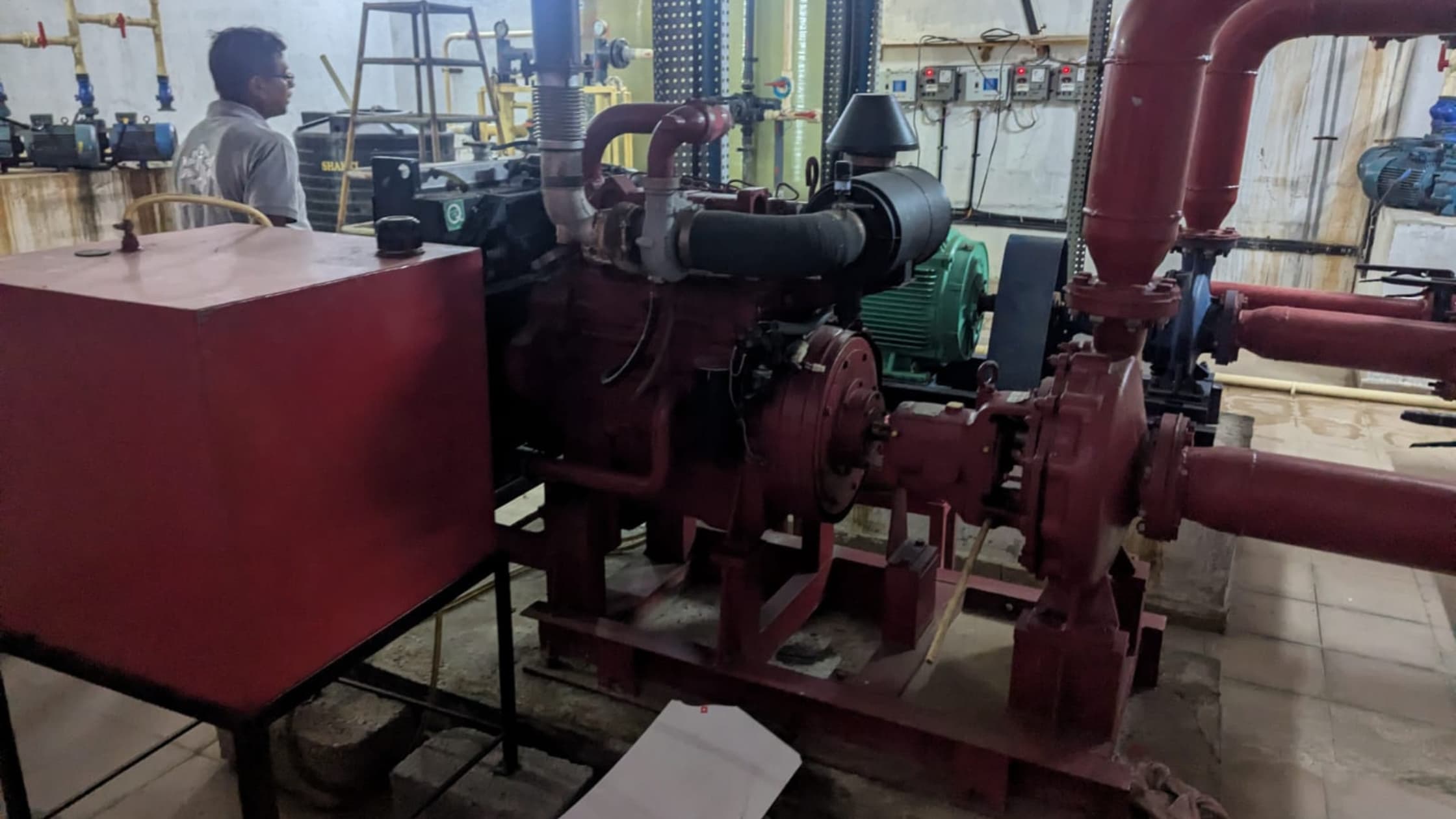
This is the finding that should keep every RWA committee member up at night.
The entire fire-fighting system — hydrants, sprinklers, hose reels, fire pumps — had never been commissioned. Never charged. Never pressurised. Never tested. The pipes were installed. The equipment was visible. But the system had never once been switched on to see if it works.
Many fire-rated doors were missing from staircases.
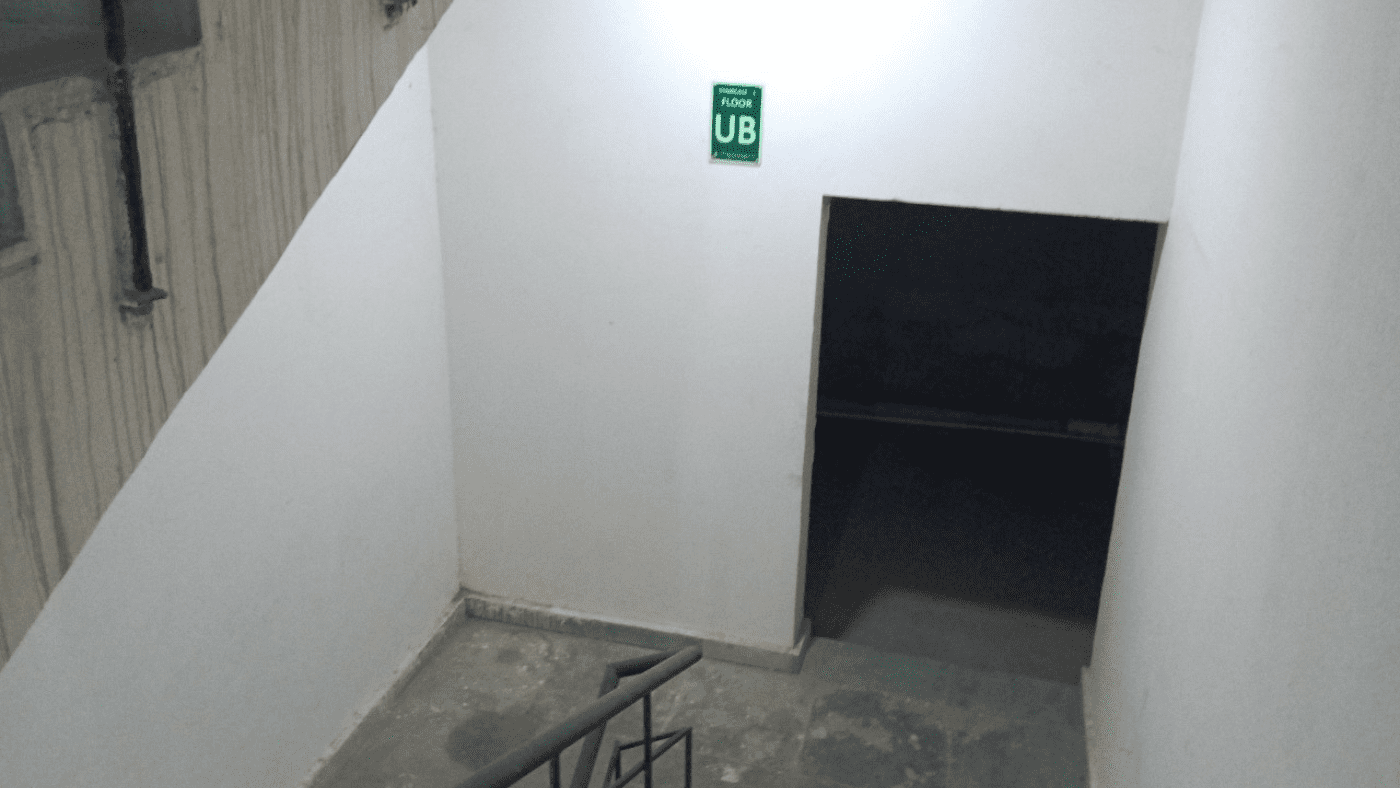
Fire-rated door not provided, is a non-compliance to NBC 2016 Part 4 (Fire & Life Safety), Fire order board not provided, is a non-compliance to NBC 2016 Part 4 (Fire & Life Safety), and as per IS 9457
PVC Protective Caps Obstruct Sprinkler Operation — Non-Compliance with Fire Safety Standards.

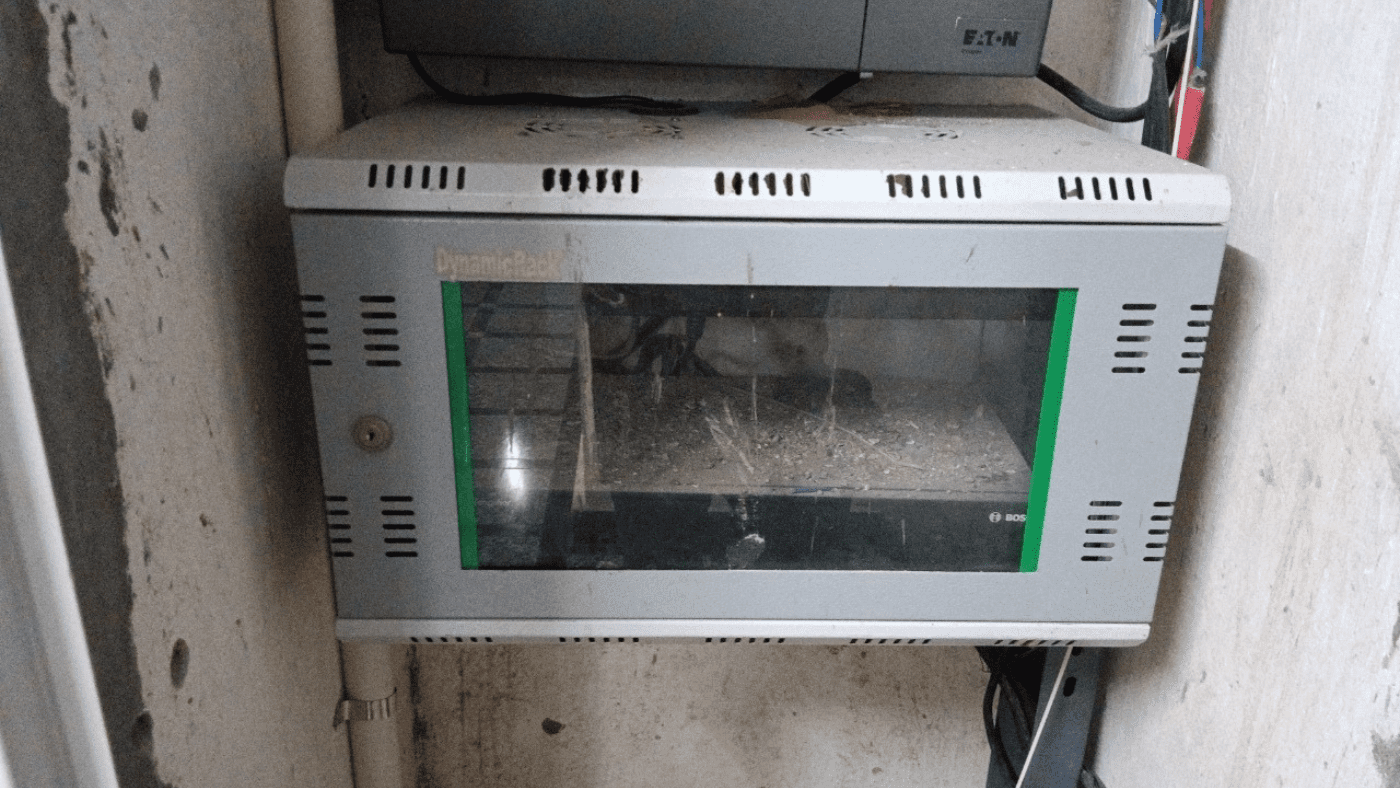
PA System Not Commissioned — Panels Locked and Inaccessible for Testing.
Fire Hydrant Pipeline Improperly Supported.
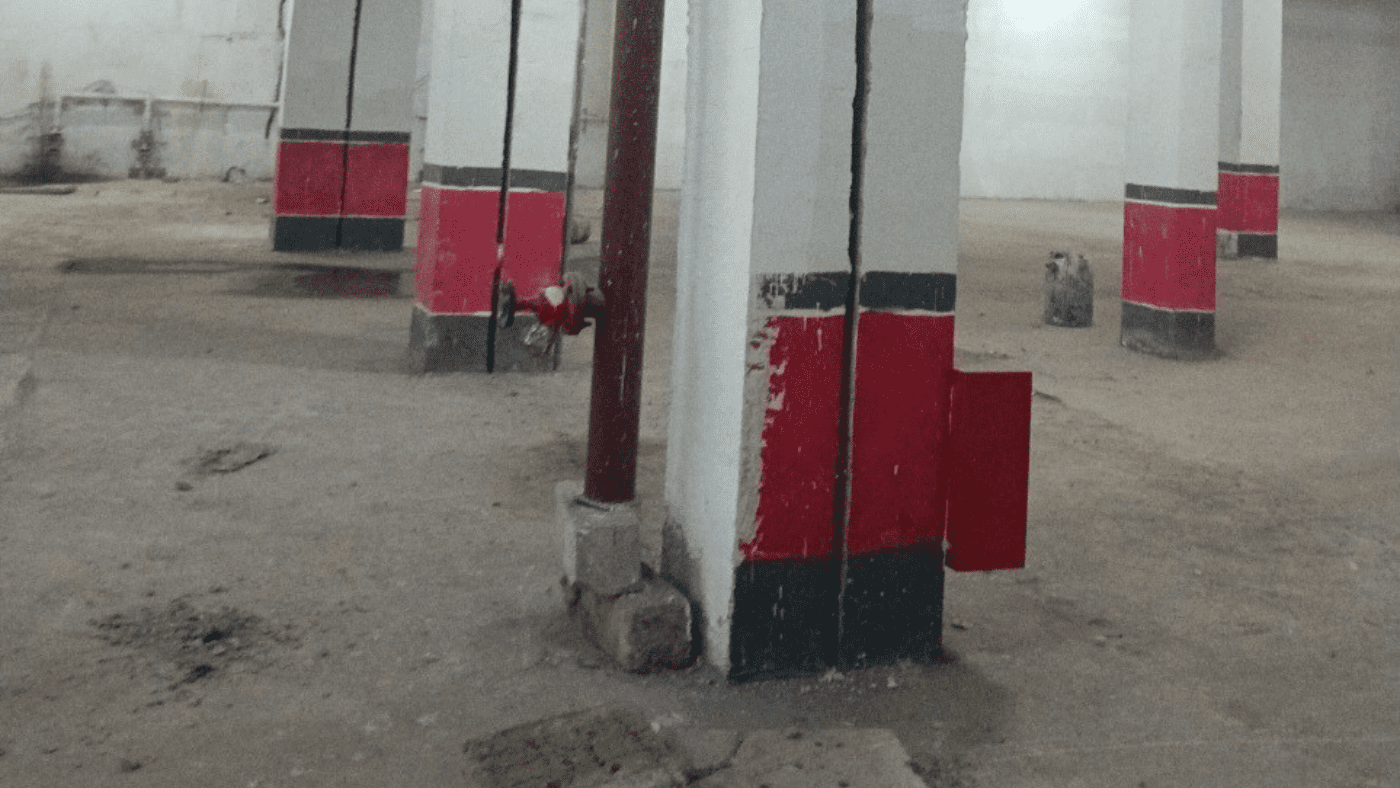
Fire Hydrant & FHC Access Blocked by Parking — Safety Risk During Emergencies.
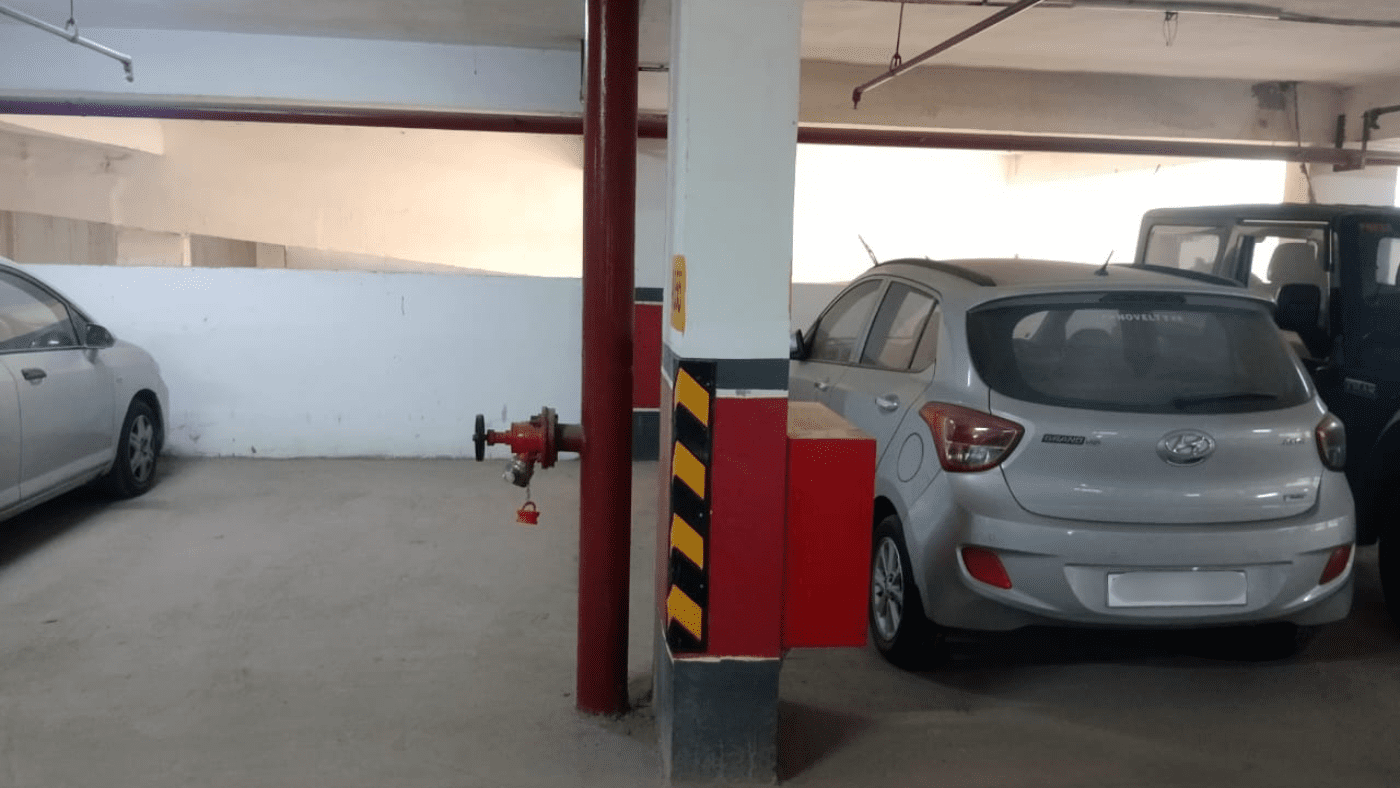
If you’re reading this and thinking “this wouldn’t happen in my society” — ask yourself: has anyone actually tested your fire system? Not looked at it. Tested it. If the answer is no, you don’t know what you have.
Earthing: The Risk Nobody Talks About.

474 earthing-related defects were found. The most serious: cable gland earthing had not been done across any of the passenger lifts or service lifts.
Earthing is the system that safely dissipates electrical fault current into the ground. Without it, if a fault occurs in a lift motor or electrical panel, the current has nowhere safe to go. It goes through the metal structure — and if someone is touching it, through them.
This isn’t a minor finishing item. This is IS 3043:2006 — a code requirement for electrical safety. It was simply not done.
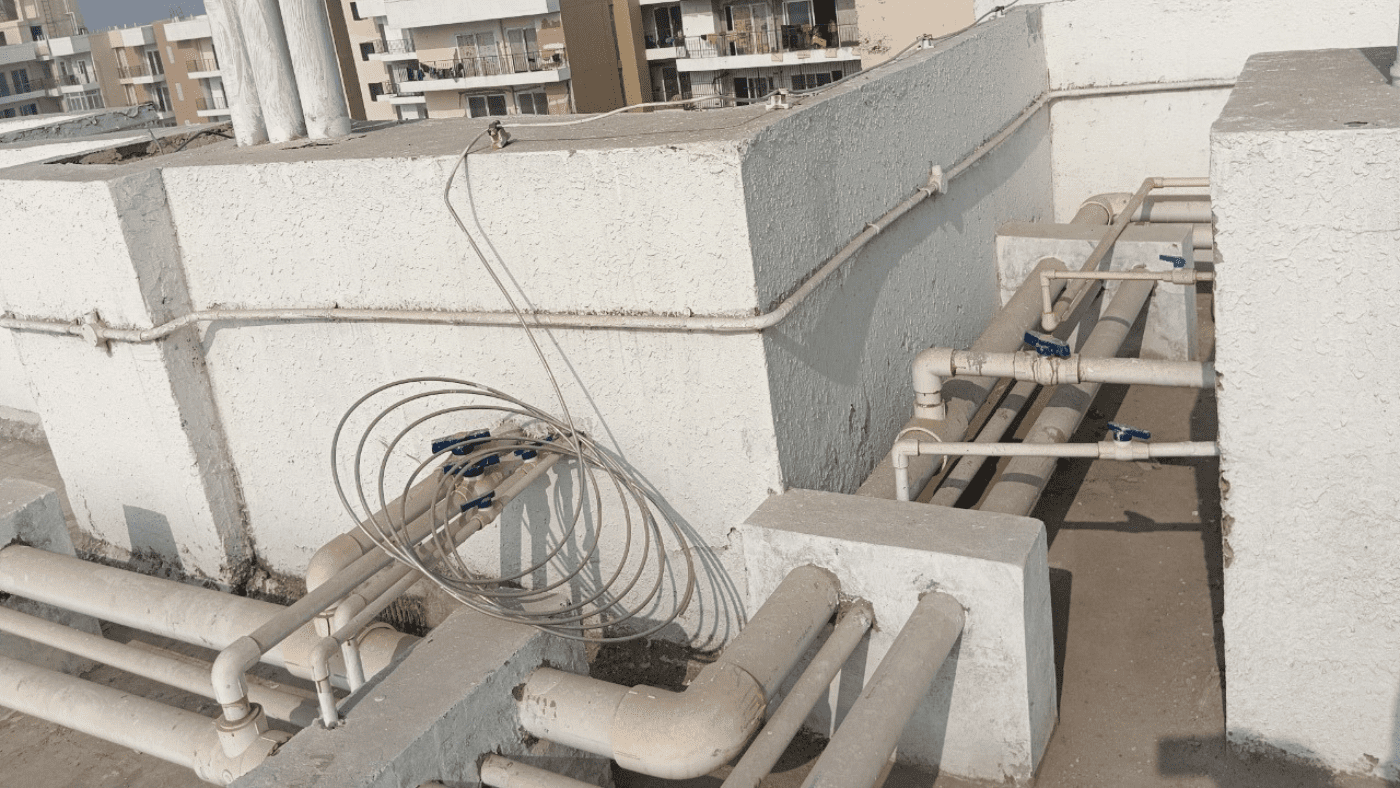
Lightning Arrester Installation Incomplete — Electrical System Unprotected.
254 Places Where Water Was Getting In.
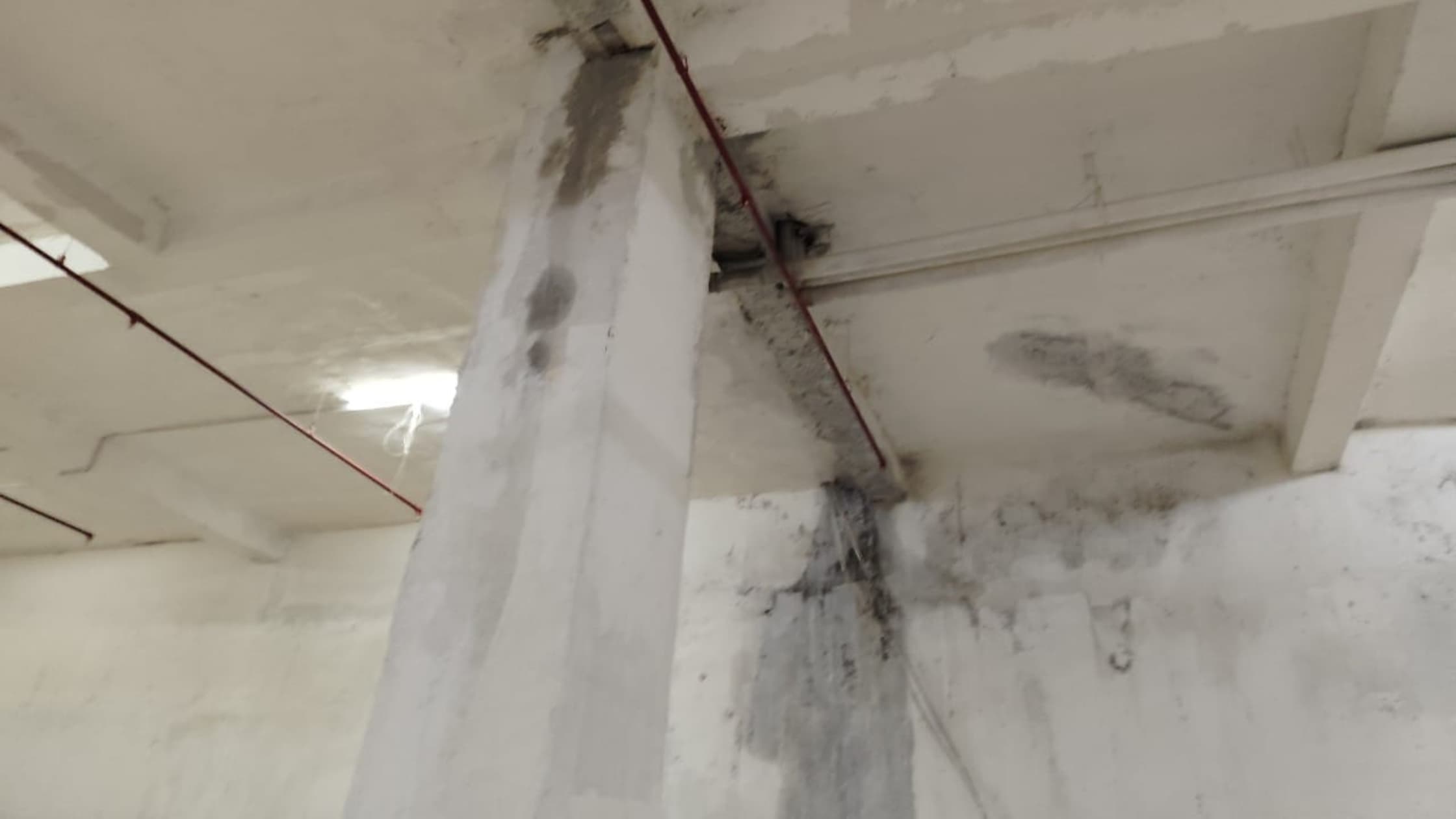
Dampness is the slow killer of buildings. It corrodes reinforcement steel inside concrete, causing it to expand, crack the concrete further, and create a self-accelerating cycle of structural deterioration. It grows mould. It damages electrical systems. And it costs enormous money to fix after handover because you often have to hack open finished surfaces to find the source.
We used thermal imaging to trace water paths completely invisible to the naked eye. A wall can look freshly painted and bone dry while thermal imaging reveals active moisture behind the surface.
Dampness is not a cosmetic issue. It is a structural issue. And if nobody catches it before handover, the RWA pays to fix a problem the Builder created.
What Else Was Lurking.
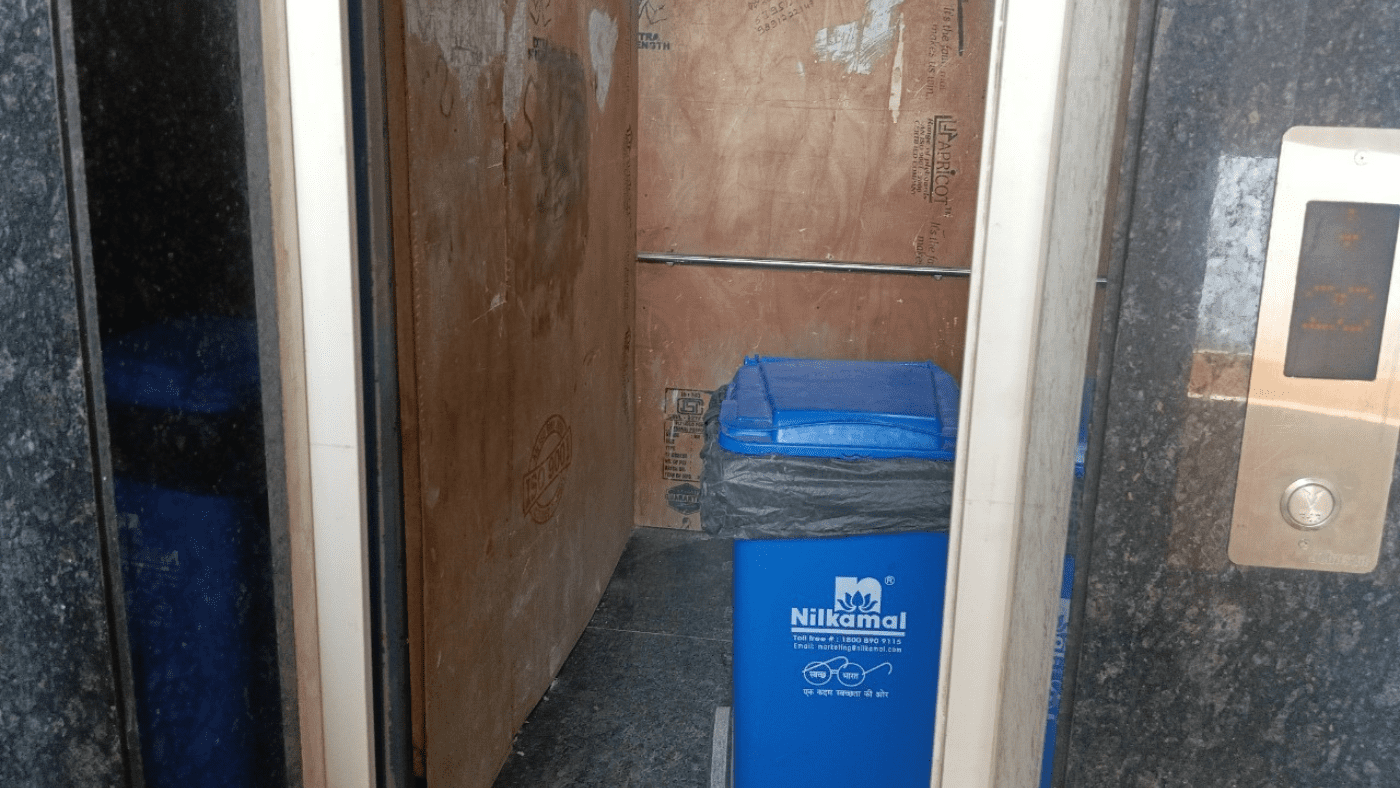
Lifts — ARD not working, the lift may not automatically move to the nearest floor during a power failure, increasing the risk of passengers being trapped inside the elevator.
STP —Sludge is being discharged directly to outside/stormwater drains and sumps. This is an unauthorized disposal route and is causing contamination risk to the stormwater network/environment. Proper sludge handling, dewatering and authorized disposal arrangement is not provided/implemented.

Plumbing — pipes were bursting under pump pressure. Different pipe materials had been connected without proper transition fittings, setting up long-term corrosion.
Why This Happens — And Why It Will Keep Happening
This is not about one bad workmanship. This is a systemic problem.
RWA committees are not technical teams. They are volunteers — teachers, IT professionals, business owners, retirees — doing their best. They should not be expected to know what cable gland earthing is or why an expansion joint cannot terminate midway. That’s exactly why independent RWA HOTO audits exist.
The handover moment is the only leverage point. Before handover, the Builder is contractually responsible. After the handover, the RWA is financially responsible. The HOTO audit is the one tool that protects residents in this window. Once the window closes, it closes permanently.
What a Proper RWA HOTO Audit Covers
A HOTO audit is not a walkthrough with a clipboard. It is a multi-layered assessment that covers six distinct audit streams:
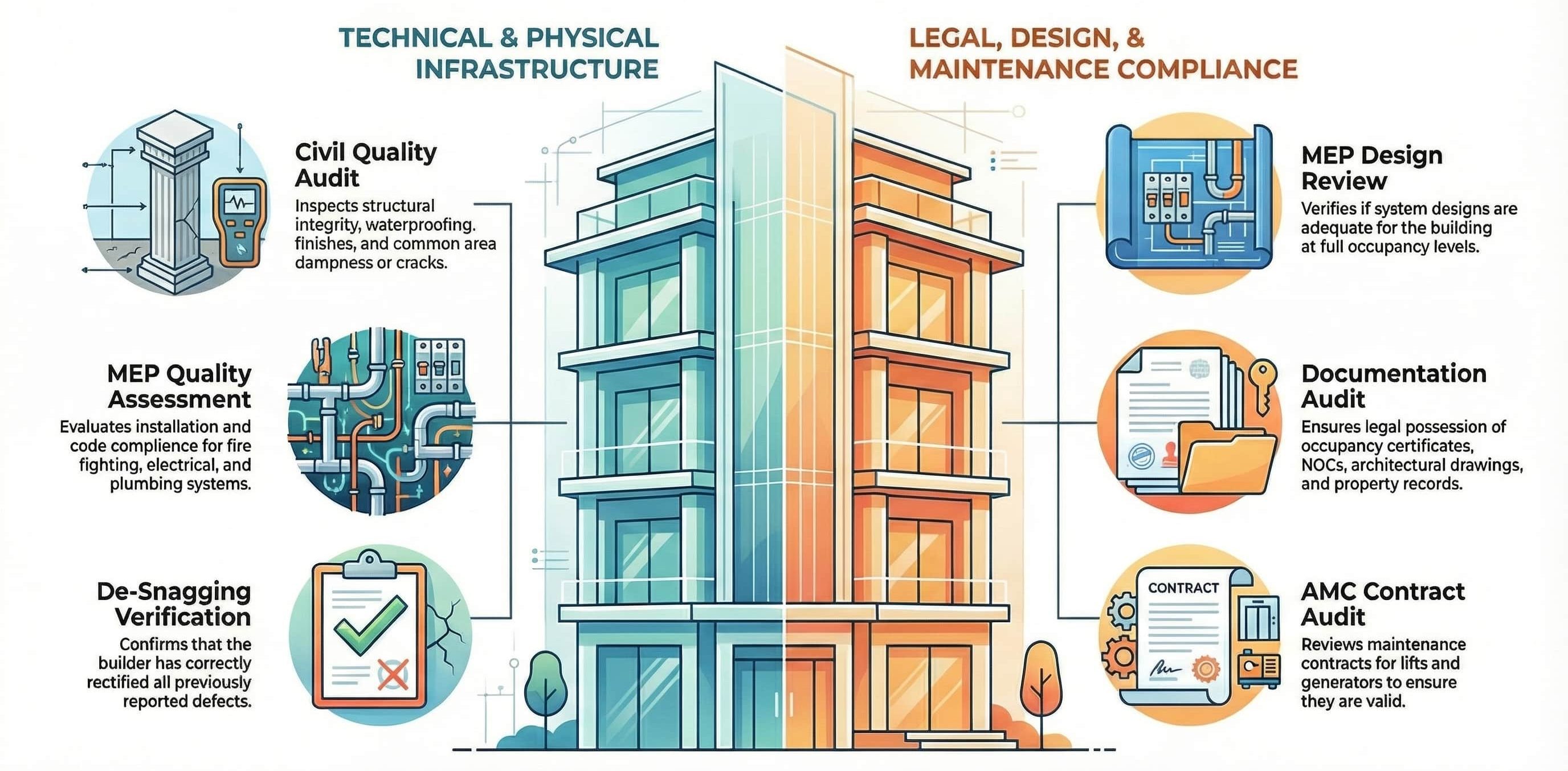
The Question Every Flat Owner Should Be Asking
If your apartment society is approaching handover — or has already taken handover without an independent pre-takeover inspection — here are the questions that matter:
Has the fire-fighting system been commissioned? Not installed — commissioned.
Is the earthing connected? The full chain — from the lightning rod on the roof, down the conductor, to the pit in the ground.
Has a structural engineer confirmed the basements are safe?
Are the expansion joints sealed? Or is water entering the building through them?
Has anyone checked the service shafts? Are they fire-rated?
If you don’t know the answers, you don’t know the condition of your building. And if you’ve already taken handover without knowing, every one of these problems is now yours — at your cost.
It Doesn’t Have To Be This Way
An RWA HOTO audit costs a fraction of what it costs to retrofit fire systems, waterproof basements, or rewire earthing after handover. It is the single highest-ROI decision an apartment association can make.
The pre-takeover inspection we conducted for this apartment society found more than 4,000 defects that would have become the residents’ financial burden. Those are 4,000 reasons the RWA was right to get a HOTO audit before signing.
Your society deserves the same protection. Because the question isn’t whether your building has hidden defects. The question is whether anyone has looked.
Nemmadi specialises in RWA HOTO audits — independent handover-takeover inspections of common facilities for apartment societies across India. We don’t do construction. We don’t supervise construction. We audit what’s been built, document what’s wrong, and give your RWA the evidence it needs to hold the Builder accountable.
If your society is approaching handover — or if you’ve taken over and something doesn’t feel right — talk to us.
Frequently Asked Questions
What is an RWA HOTO audit? An RWA HOTO (Handover-Takeover) audit is an independent, third-party pre-takeover inspection of all common facilities in a residential complex — conducted before the Resident Welfare Association accepts them from the Builder. It covers six streams: Civil Quality Audit, MEP Quality Audit, MEP Design Audit, Documentation Audit, AMC Audit, and De-Snagging. The purpose is to document every deficiency with photographs, code references, and hard data so the RWA can hold the Builder accountable for rectification before signing the handover.
When should an RWA conduct a HOTO audit? The ideal time is before the RWA formally accepts the handover of common areas from the Builder. This is the only window where the Builder is still contractually and legally responsible for fixing defects. Once the handover is signed, the financial responsibility shifts to the residents. Under RERA, builders are responsible for a building’s quality and safety for five years after handover — but getting defects fixed is far easier before the papers are signed than after.
What areas does a HOTO audit cover? A comprehensive HOTO audit covers every common area in the complex — basements, lifts, electrical rooms, transformers, DG sets, STP, WTP, sumps, fire fighting systems, lobbies, corridors, staircases, roof terraces, parking areas, podium, overhead water tanks, roads, pathways, shafts, ducts, basement ventilation systems, rain water harvesting, and dampness across all shared spaces. It also includes a documentation audit to verify that the Builder has handed over all legally required certificates, NOCs, drawings, and warranty documents.
How is a HOTO audit different from a home inspection? A home inspection focuses on an individual apartment — checking finishes, fittings, plumbing, and electrical within your flat. A HOTO audit covers the entire common infrastructure of the complex — fire systems, lifts, basements, STP/WTP, electrical panels, service shafts, and all shared areas. A typical home inspection for a 2,000 sq. ft. flat takes about 4–4.5 hours. A HOTO audit for a large complex can take several weeks with a multi-disciplinary team of Civil and MEP engineers.
What happens if defects are found during the HOTO audit? Every defect is documented with photographs, a unique ID, its precise location, and the applicable IS code or NBC clause it violates. These are compiled into a formal snag report and presented to the Builder with a consolidated action list. The RWA uses this as evidence to demand rectification before accepting the handover. Progress can be tracked through a live dashboard, and de-snagging audits verify that each item has been properly closed.
Can a HOTO audit be done after the RWA has already taken handover? Yes, a HOTO audit can still be conducted after handover — and it is still valuable. Under RERA, the Builder remains responsible for structural defects and quality issues for five years post-handover. An audit conducted during this period gives the RWA documented evidence to take up with the Builder or pursue legal recourse. However, the RWA’s negotiating leverage is significantly stronger before handover than after, which is why auditing before signing is always recommended.
How much does an RWA HOTO audit cost? The cost depends on the size and complexity of the complex — the number of towers, basement levels, amenities, and MEP systems involved. However, in every case, the cost of a HOTO audit is a fraction of what it would cost the RWA to retrofit fire systems, waterproof basements, or rewire earthing after taking handover. It is consistently the single highest-ROI decision an apartment association can make.