
A no-holds-barred guide for RWA HOTO decisions before your builder walks away forever
RWAs Keep Making the Same ₹2 Crore Mistake
Every month, RWAs across India take over massive residential projects worth hundreds of crores. And every month, many choose their Pre-RWA HOTO auditor based on the lowest fee, friend-of-a-friend recommendation, or a consultant with a polished personal profile.
Six months later, reality hits:
- The transformer is undersized.
- The STP cannot handle full occupancy.
- The fire system is non-compliant with NBC 2016.
- The basement has chronic seepage.
- The warranty window has closed.
And the bill lands squarely on the residents.
We have witnessed RWAs spend:
- ₹10s of lakhs spent on STP retrofits,
- ₹10s of lakhs spent replacing undersized transformers,
- ₹10s of lakhs on never-ending seepage repairs,
- ₹10s of lakhs correcting fire-safety gaps they should have known about earlier.
These are not freak accidents.
These are the predictable consequences of choosing the wrong auditor.
The Uncomfortable Truth About “Budget” HOTO Audits
Let’s be brutally honest.
There is a rising trend of two-person consulting outfits positioning themselves as HOTO auditors:
- ex-committee members of their own apartment,
- technocrats with long careers (but not in auditing),
- individuals with strong community credentials,
- people with retrofitting or facility-side backgrounds.
Their pitch sounds impressive — but the model itself is flawed.
1. Two people cannot audit a 1,000+ unit project without cutting corners
A real HOTO audit demands:
- civil engineers,
- MEP engineers,
- plumbing specialists,
- MEP design sufficiency auditors,
- documentation analysts,
- tool-based inspection technicians.
A township with basements, towers, transformers, pump rooms, fire systems, WTP, STP and 1,000+ flats cannot be audited by two individuals, no matter how experienced.
When manpower is insufficient, only two outcomes are possible:
- They rush.
- They skip.
There is no third option.
2. The Retrofit Conflict of Interest
Some auditors also provide:
- STP upgrades,
- WTP modification,
- electrical retrofitting,
- composting solutions,
- RWH implementation.
This creates a fundamental conflict:
If an auditor profits from “fixing” the problems they discover, can the audit truly be independent?
No. And RWAs must stop pretending otherwise.
Auditing and execution must never sit under the same business model.
What a Real HOTO Audit Looks Like
Most RWAs have never seen a proper RWA HOTO audit scope. So they assume snagging = auditing.
Here is what real looks like:
1. Civil Engineering Audit
Beyond surface-level checks, real civil audit includes:
- Basement seepage diagnostics
- Crack mapping and workmanship quality audit
- Roof and terrace waterproofing analysis
- Parapet wall integrity checks
- STP/WTP room leakage and structural violation review
- Pump-room drainage assessment
- External plaster uniformity and defect patterns
- Shaft/duct completion checks
- Sump structural integrity verification
Anything less is not an audit — it is a walkthrough.
2. MEP Workmanship Audit (Where Most Consultants Collapse)
Because this requires actual engineers.
Electrical Audit Includes:
- Transformer & HT yard inspection
- CEIG-compliant aggregate spreading
- Cable tray routing & dressing
- Panel board earthing and identification
- Electrical shaft earthing strip verification
- External lighting earthing
- Streetlight pole body earthing
- Panel load balancing
Fire & Life Safety Audit Includes:
- Sprinkler system workmanship
- Hydrant locations, valves, pressure analysis
- Fire pump room separation wall
- Basement water-curtain system validation
- Staircase width & travel distance checks
- Fire escape signage & assembly point
- Fire alarm loop test
- Pressurisation systems
- Basement ventilation review
- Fire control room location & compliance
Plumbing Audit Includes:
- Pipe identification & flow arrows
- Support system adequacy
- Leakage & venting issues
- Solar heater system and OHT integrity
- STP/WTP interconnection checks
DG Systems:
- EB–DG changeover timing
- Synchronisation testing
- Phase load current verification
This is what multi-disciplinary engineering looks like — not “visual checks”.
3. MEP Design Adequacy Audit — The True Differentiator
This is the single area where small outfits simply cannot compete.
Because design adequacy requires:
- load calculation,
- transformer sizing,
- DG sizing,
- storage calculations,
- sump sizing,
- fire-sump & pump calculations per NBC 2016,
- pipe diameter adequacy,
- storm water design validation,
- STP capacity vs discharge analysis.
Most consultants cannot do design adequacy. They are limited to surface-level inspection.
And these design issues are exactly the ones that cause ₹50 lakh to ₹2 crore losses.
4. Functionality Testing — The Part Everyone Overlooks
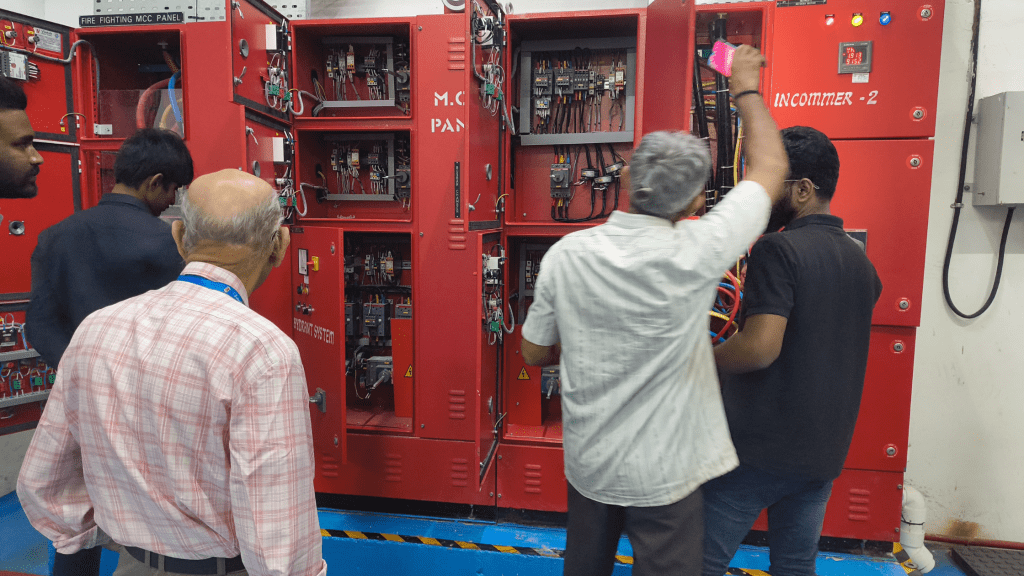
A professional audit tests actual behaviour, not assumptions:
- DG changeover
- Panel continuity
- Fire pump operation
- Fire alarm system
- Public address system
- STP electromechanical equipment
- WTP treated water parameters
- Lift ARD & emergency behaviour
- Boom barrier operation
If your auditor does not test systems, the report is incomplete by definition.
5. Tools Matter
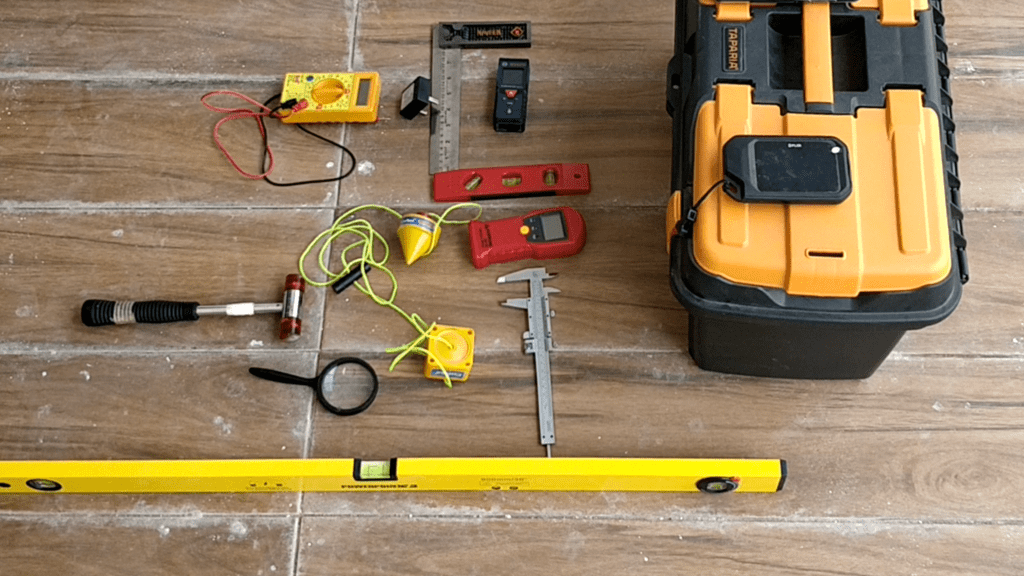
A lot.
Ask your auditor what tools they use.
If you hear “visual inspection”, end the meeting.
Professional HOTO audits require:
- thermal imagers,
- moisture metres,
- laser measures,
- laser levels,
- electrical testers,
- etc
Opinion is not evidence. Only measurement is.
How to Identify a Real Audit Institution (Not a Consultant Team)
Before you sign anything, ask:
- How many engineers will be deployed every day?
- Is your team in-house or subcontracted?
- Do you offer retrofitting or maintenance services?
- Which tools will be used during inspection?
- Do you conduct MEP design adequacy audits?
- Can you share a redacted sample report from a 1,000+ unit project?
- What standards do you reference (NBC, IS Codes, BIS)?
- What is your organisational continuity if we need help after 2 years?
These eight questions instantly separate institutions from side businesses.
RWA committees need a comprehensive framework to evaluate service providers and make informed decisions.
Comprehensive RWA HOTO & MANAGEMENT HANDBOOK for Seamless Handover
The Real Cost of a Wrong RWA HOTO Audit
| Missed Issue | Approximate Cost to RWA |
| Undersized transformer | ₹20-50 lakhs |
| STP capacity shortfall | ₹50–60 lakhs + CFO delay |
| Fire system non-compliance | ₹30–50 lakhs + NOC delays |
| Chronic seepage | Upto ₹2 lakhs |
| Lift safety faults | ₹20–40 lakhs |
Saving ₹5–10 lakhs on an audit can cost ₹50 lakhs to ₹2 crores later.
Consultants vs Institutions
The difference is not subtle.
Consultant
- 1–2 individuals
- No manpower depth
- Limited testing capability
- No design audit
- Possible retrofit conflict
- Dependent on personal bandwidth
- No long-term continuity
Institution
- Multi-disciplinary engineering workforce
- SOP-driven methodology
- In-house tools & testers
- Design adequacy checks
- No retrofitting — no conflict
- Legal entity with accountability
- Continuity beyond any individual
For a ₹500 crore asset, the choice should be obvious.
Your RWA only gets one chance to conduct a RWA HOTO Audit before the builder exits permanently.
This is the final opportunity to protect residents from crores in future expenditure, legal exposure, and operational failures.
This is not the place to cut corners.
This is not the place for a two-person consultancy.
This is not the place for a vendor-auditor hybrid with retrofit interests.
Your HOTO audit deserves an institution.
Not a side-business.
Not a consultant team.
Not a shortcut.
Choose the organisation with the people, tools, systems and depth to protect your community for years to come.
Your residents are counting on you.