
Cracks in buildings are a pervasive issue that can affect both the aesthetic appeal and structural integrity of a structure. While some cracks are superficial, others may signal more serious problems that need immediate attention. Understanding the causes, classifications, preventive measures, and effective repair techniques is essential for anyone involved in construction or building maintenance. This blog delves into these aspects, drawing from multiple detailed studies and technical documents on the subject.
Cracks in walls of new house | ಹೊಸ ಮನೆಯ ಗೋಡೆಗಳಲ್ಲಿ ಬಿರುಕುಗಳು
Why completed buildings collapse
1. Causes of Cracks in Buildings
Cracks can develop due to a wide array of factors, ranging from environmental influences to construction-related issues. Here are the primary causes identified:
- Thermal Movements: Most building materials expand when heated and contract when cooled. This cyclical movement, known as thermal movement, is one of the most potent causes of cracking in buildings, especially in external walls and roofs which are directly exposed to varying temperatures. Without proper expansion and contraction joints, these movements can induce significant stress, leading to cracks.
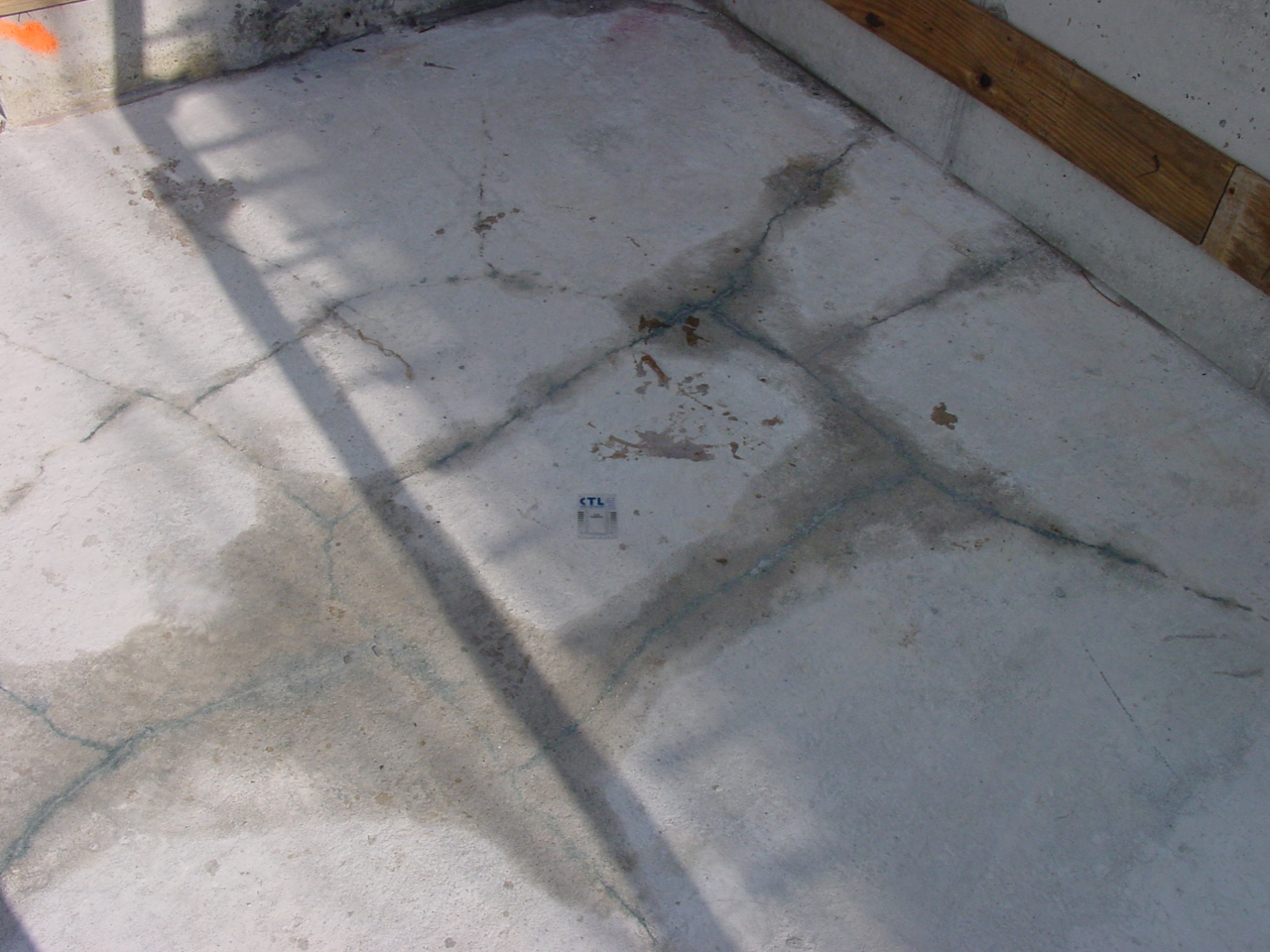
- Chemical Reactions: Chemical reactions in building materials can lead to expansive forces that cause cracking. A common issue is the alkali-silica reaction (ASR), where silica in aggregates reacts with alkali hydroxides in concrete, forming a gel that expands as it absorbs moisture. This expansion creates internal pressures that result in cracks. Additionally, exposure to sulfites can lead to sulphate attack on concrete, where the formation of expansive products from the reaction between sulphate ions and hydrated compounds in cement causes cracking.

Source: https://en.wikipedia.org/wiki/Alkali%E2%80%93silica_reaction
- Foundation Movements: Unequal settlement of the foundation is another major cause of cracks. This often occurs when the soil beneath the foundation has varying bearing capacities or when the foundation is inadequately designed. Shear cracks are common in such scenarios, particularly when the settlement is significant.
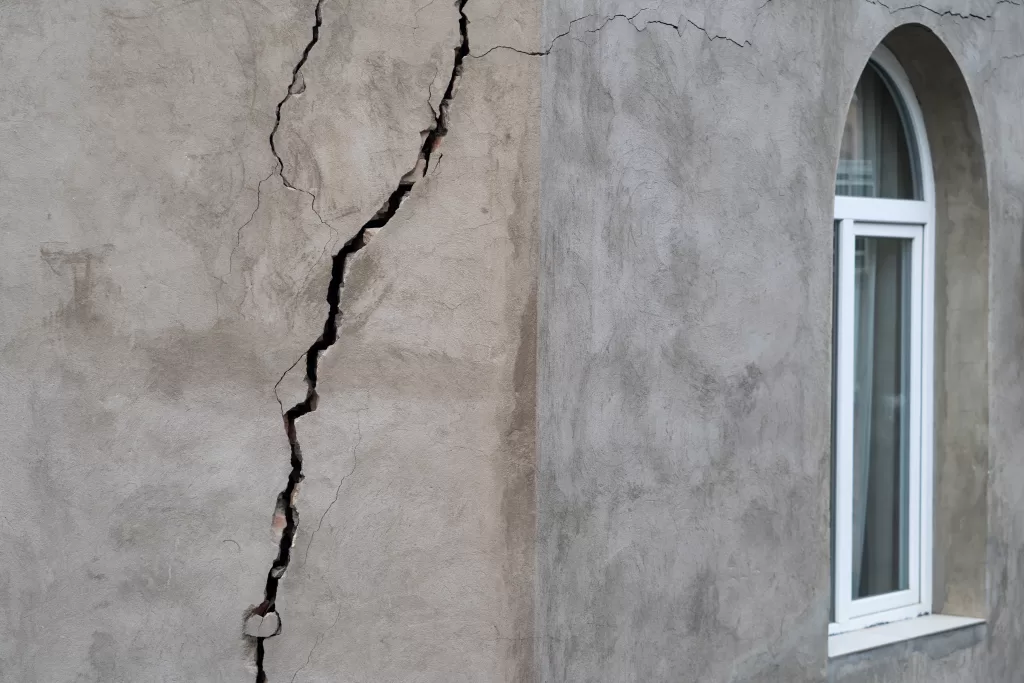
Source: https://www.jkcement.com/blog/construction-planning/how-to-repair-cracks-in-walls-a-complete-guide/
- Moisture Variations: Building materials, especially porous ones like bricks and concrete, tend to expand upon absorbing moisture and contract when they dry out. These moisture variations cause cyclical movements that lead to cracks over time. This is especially true in environments with significant seasonal changes in humidity.
- Elastic Deformation: When materials with different elastic properties are used together, the resulting differential movement under load can cause cracks. For example, when brickwork is combined with concrete, the different rates of movement can lead to stress concentrations and subsequent cracking.
- Faulty Construction Practices: Poor workmanship, such as improper mixing of materials, inadequate curing of concrete, and lack of supervision, can lead to the early formation of cracks. Additionally, the use of substandard materials or failure to follow design specifications can exacerbate this issue.
- Vegetation: Tree roots growing too close to buildings can exert pressure on foundations and walls, leading to cracking. This is particularly common in areas where expansive soils are present, as the roots can cause significant shifts in the soil.

2. Classification of Cracks in Buildings
Cracks in buildings are generally categorised into two main types, each with distinct implications for the building’s safety and durability:
- Structural Cracks: These cracks are serious and occur due to issues like faulty design, overloading, or poor construction practices. Structural cracks can compromise the stability of a building and include various types such as:
- Flexural Cracks: Typically found in beams and slabs, these cracks occur due to bending stresses.
![Structural Cracks in Concrete[ a detailed study] - Structural Guide](https://www.structuralguide.com/wp-content/uploads/2020/01/Beam-flexural-cracking.jpg)
Source: https://www.structuralguide.com/structural-cracks-in-concrete/
-
- Shear Cracks: These occur in beams and columns and are due to shear forces exceeding the material’s capacity.
- Torsional Cracks: These cracks arise when a structural member is subjected to twisting forces.
- Corrosion Cracks: Caused by the expansion of corroded reinforcement within concrete, leading to significant stress and cracking.
- Non-Structural Cracks: These are generally caused by internal forces within the materials, such as moisture content changes, temperature variations, and minor settling. While these cracks do not typically affect the structural integrity of the building, they can lead to issues like water penetration and reduce the building’s aesthetic appeal. Common non-structural cracks include:
- Plastic Settlement Cracks: Occur as concrete settles and shrinks before it has fully set.
 Source:
-
- Plastic Shrinkage Cracks: Formed during the initial drying phase of concrete.
- Crazing: A network of fine cracks that develop on the surface of concrete, often due to rapid drying.
3. Identifying and Measuring Cracks in Buildings
Identifying and measuring cracks accurately is crucial for determining the appropriate repair strategy. The following methods are commonly used:
- Visual Inspection: The first step in crack identification involves a thorough visual inspection to assess the extent, pattern, and location of the cracks. This helps in determining whether the cracks are structural or non-structural.
- Crack Width Measurement: Cracks are typically classified based on their width:
- Thin Cracks: Less than 1mm wide.
- Medium Cracks: Between 1mm and 2mm wide.
- Wide Cracks: More than 2mm wide.
- Tools like crack width gauges and precision callipers are used to measure the width of cracks accurately. Monitoring these cracks over time can help in assessing whether they are stable or active.
- Monitoring Techniques: Techniques such as using tell-tales, crack metres, or precision callipers are essential for monitoring the movement of cracks over time. This helps in determining whether the crack is active or dormant, which is crucial for deciding the appropriate repair method.
How Engineers Accurately Identify Wall Cracks: Tools & Techniques Revealed! HOME INSPECTION
4. Preventive Measures for Cracks in Buildings
Preventing cracks is always more cost-effective than repairing them. Key preventive strategies include:
- Proper Design and Material Selection: Ensuring that the building design accounts for environmental factors like temperature fluctuations and soil movement is essential. The selection of materials should also consider their elastic properties, moisture absorption rates, and compatibility with other materials used in the structure.
- Chemical Admixtures: The use of chemical admixtures in concrete can significantly reduce the risk of cracking. These admixtures can lower the drying shrinkage of concrete and improve its overall durability. Additionally, certain synthetic fibres can be incorporated into concrete mixes to reduce the formation of shrinkage cracks.
- Foundation Design: A well-designed foundation that is tailored to the specific soil conditions and load requirements of the building can prevent differential settlement and the resultant cracks. This includes ensuring proper compaction of backfill and designing for the expected load distribution.
- Routine Maintenance: Regular inspection and maintenance of buildings can prevent the progression of small, non-structural cracks into larger, structural ones. This includes timely repairs, sealing of joints, and addressing moisture ingress issues before they escalate.
5. Techniques for Repairing Cracks
Once cracks have been identified, selecting the appropriate repair technique is crucial to restoring the building’s integrity:
- Epoxy Injection: This is an effective method for repairing non-moving cracks in concrete walls, slabs, and columns. The technique involves injecting epoxy into the crack under pressure, which then hardens to restore the original strength of the concrete.
- Grouting and Sealing: This method involves enlarging the crack along its exposed surface and filling it with a flexible sealant. It is particularly effective for cracks that do not affect the structural integrity of the building but need to be sealed to prevent water ingress.
- Stitching: For more severe structural cracks, stitching involves drilling holes on both sides of the crack and using metal staples (U-shaped metal units) filled with grout to restore tensile strength to the damaged area. This method is often used in masonry repairs and for reinforcing cracked walls.
- Dry Packing: This technique involves packing a low-moisture content mortar into the crack. The mortar is tamped tightly into the crack, creating a strong bond between the new and existing concrete.
- Polymer Impregnation: For certain types of cracks, polymer impregnation involves injecting liquid monomers into the crack, which then polymerize into a solid. This method is highly effective for long-term repairs, particularly in areas exposed to chemicals or moisture.
- Gravity Filling: This technique is used for sealing fine surface cracks by pouring low-viscosity resins or monomers into the crack, allowing gravity to draw the material into the crack to seal it completely.
Cracks in buildings are an inevitable part of the ageing process of structures. However, with a comprehensive understanding of their causes and the application of proper preventive and repair measures, the impact of these cracks can be minimised. Building owners and engineers must be vigilant in inspecting, maintaining, and repairing cracks to ensure the long-term safety and durability of their buildings.
By drawing from detailed studies and technical documents, it’s clear that a proactive approach to managing cracks—through appropriate design, material selection, and timely repairs—can significantly extend the life of a building.
For a deeper dive into specific techniques and case studies, readers are encouraged to refer to the detailed sources that informed this blog.
References
- IRJET-V4I11242.pdf: A review on causes, prevention, repair, and maintenance of cracks in buildings. IRJET-V4I11242, various pages.
- CRACKS STUDY.pdf: Study on causes of cracks & its preventive measures in concrete structures. Study on Causes of Cracks & its Preventive Measures, various pages.
- ConferenceVITCracks.pdf: Investigation of cracks in buildings. Investigation of Cracks in Buildings, various pages.
- StudyofCracksinBuildings.pdf: Study of cracks in buildings with emphasis on structural integrity. Study of Cracks in Buildings, various pages.
- Handbook on Cracks in building (causes & prevention).pdf: Comprehensive guide on causes, maintenance, and repair of cracks. Handbook on Cracks in Building, various pages.
- Home inspections for first-time home buyers – HOME QUALITY CHECK
- https://www.gcelab.com/blog/what-is-the-modulus-of-elasticity-of-concrete
- https://www.houcks.com/news/concrete-expansion-joint-repair-causes-effects/
- https://www.forconstructionpros.com/concrete/article/20862452/why-thermal-cracking-happens-how-to-control-thermal-cracking
- https://engineeringcivil.org/articles/concrete/cracks-in-concrete-types-causes-of-concrete-cracking/
- https://structville.com/treatment-of-cracks-in-buildings
- https://inspectapedia.com/structure/Brick_Wall_Expansion_Cracks.php
- https://structville.com/treatment-of-cracks-in-buildings
- https://www.forconstructionpros.com/concrete/article/20862452/why-thermal-cracking-happens-how-to-control-thermal-cracking
- https://structville.com/treatment-of-cracks-in-buildings