
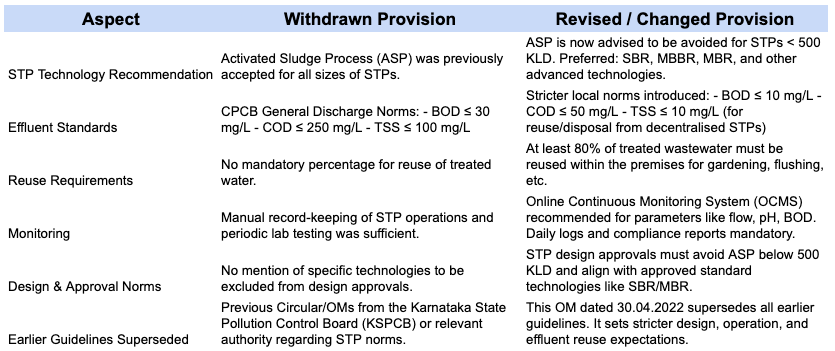
Subsequently there has been an update: reference to update
Sewage Treatment Plants (STPs) are a critical infrastructure for apartment complexes, especially in Bangalore, where rapid urbanization demands sustainable wastewater management. Ensuring Sewage Treatment Plant compliance Bangalore is crucial to meet environmental regulations and promote sustainable living. The Karnataka State Pollution Control Board (KSPCB) has set comprehensive guidelines in 2021 to ensure apartment complexes meet environmental standards and protect water bodies from pollution. Compliance with these regulations is not just a legal mandate but a responsibility towards the community and environment. Proper Sewage Treatment Plant compliance Bangalore requires regular audits, maintenance, and adherence to the latest KSPCB guidelines.
In this guide, we explore the essential KSPCB STP guidelines applicable to apartment complexes in Bangalore and highlight why thorough RWA Handover-Takeover (HOTO) Audits are indispensable to ensuring these norms are met effectively.
Ensuring Sewage Treatment Plant compliance Bangalore involves more than just installing an STP—it requires careful monitoring, maintenance, and adherence to technical standards. This is where RWA Handover-Takeover (HOTO) audits become critical
Requirement to Install an STP:
An apartment complex is mandatorily required to install an STP if it has 20 Units and above or has a total built-up area of 2,000 square meters and above, including basement. This requirement stems from the responsibility to maintain the wholesomeness of water bodies as prescribed by the Water (Prevention and Control of Pollution) Act, 1974.
Approved STP Technologies:
The approved technologies are Activated Sludge Process (ASP), Sequential Batch Reactor (SBR), Membrane Bio Reactor (MBR), and Moving Bed Bio Reactor (MBBR) / Fluidized Aerobic Bed Reactor (FAB).
However, the sources state that ASP shall be avoided for all decentralized STPs less than 500 KLD. Given that many apartment STPs would fall under this category, it is preferable to opt for a Sequential Batch Reactor (SBR) with Ultrafiltration or a Membrane Bio Reactor (MBR) or a Moving Bed Bio Reactor (MBBR) with Ultrafiltration.
Key Unit Operations and Requirements:
- Equalization Tank: All approved technologies shall have an Equalization Tank with a minimum holding period of 8 hours.
- Anoxic Tank: Required for Activated Sludge Process (ASP), Membrane Bio Reactor (MBR), and Moving Bed Bio Reactor (MBBR) / Fluidized Aerobic Bed Reactor (FAB) to achieve De-Nitrification. Return Activated sludge shall be pumped into the Anoxic Tank. It is not required for the Sequential Batch Reactor (SBR).
- Aeration Tank: Adequate care must be taken for all technologies to ensure that higher Dissolved Oxygen (DO) is maintained in the Aeration Tank in excess of 4 mg/L. Air Blowers are essential for this, supplying adequate air volume, and are critical for BOD removal (recommended 2.5 kg of oxygen per kg of BOD removal).
- Pre-Aeration Tank: For SBR, a Pre-Aeration Tank is stated as not required. However, if the contents of the SBR Reactor are pumped back to the Pre-Aeration Tank, better control of De-Nitrification can be achieved.
- Membrane Tank: Required for MBR. Membranes shall be replaced periodically as per the Manufacturer’s specifications.
- Ultrafiltration System: Shall be mandatorily provided for the treated sewage reuse for toilet flush and also to avoid recontamination at the final holding tank. This is preferred with SBR and MBBR technologies.
- Sludge Holding Tank: This tank shall be mandatorily provided to hold the excess sludge prior to dewatering.
- Sludge Dewatering: Sludge drying beds and filter presses shall not be used due to operational issues. For STPs less than 500 KLD (common for apartments), Vertical Centrifuge / Belt Press / Screw Press system shall be used.
- Final Treated Water Holding Tank: A minimum of 2 days’ capacity (Design Capacity of STP) shall be provided to store and use the water.
- Mechanical Equipment: Includes Bar Screen Chamber, Oil & Grease Trap (to trap oils), and various Pumps (Raw sewage, centrifugal, submersible, sludge transfer). Bar Screen Chamber and Oil & Grease Chamber shall have clear and easy access. Equipment should preferably be submersible for easy maintenance without emptying tanks.
Noise and Vibration Control:
- Problems with noise are a frequent complaint from residents. Air Blowers, which form the heart of the treatment, are a source of noise.
- Air Blowers should be away from residential units.
- Air blowers shall be provided with anti-vibration mounts and acoustic Enclosures.
- Acoustic Enclosures shall be provided to ensure that the noise from the Air Blower should be less than the permissible limits, which is 55 dB for Residential areas.
Location Guidelines:
- Improper location is a major cause of complaints (noise, smell).
- STP shall be located, preferably under drive way, clubhouses, play area and as far away from apartment complexes.
- Never locate the STP in the basement of any flats of apartment towers.
- Access from the lowest basement is not permitted due to flooding, smell, and sound nuisance. Access should be from the ground level / Upper Basement.
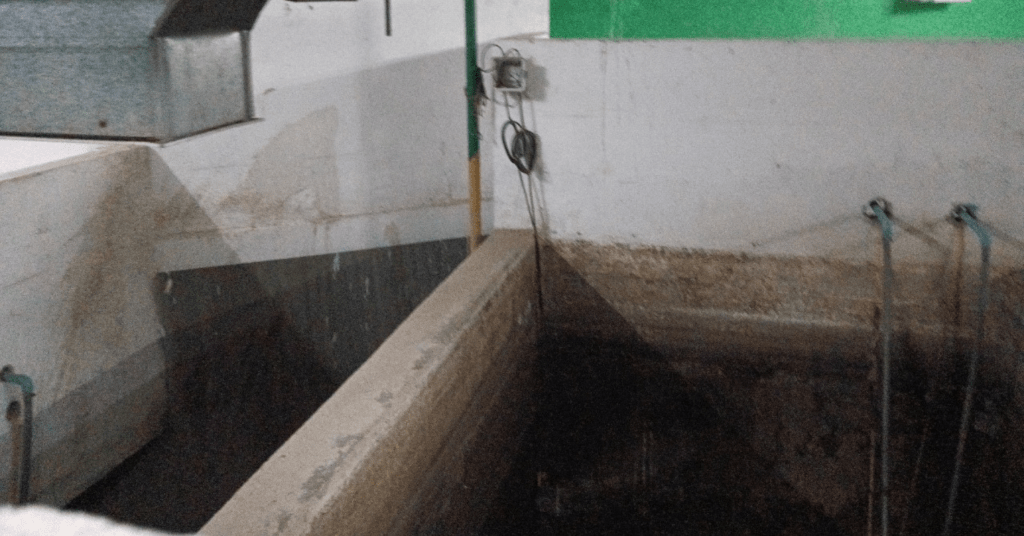
- All tanks should be open, and access shall be through well-designed walkways and headroom. An STP shall never be fully closed.
Ventilation:
In case the STP is located in the basement, Mechanical Ventilation shall be provided to ensure adequate ventilation with a minimum of 25 air changes per hour. The exhaust should be terminated at the terrace level, and ducting inside the shaft shall have acoustic insulation and not run along flats.
Treated Sewage Standards:
The final treated sewage shall conform to the following standards:
| pH: 6.5-8.5 |
| BOD (5 day): <10 mg/l |
| COD: <50 mg/l |
| Suspended Solids: <10 mg/l |
| Ammonical Nitrogen: <5 mg/l (As discussed in our previous conversation, this is the standard for final treated sewage). |
| Total Nitrogen: <10 mg/l |
| Faecal Coliform: <100 MPN/100 ml |
Mandatory Sensors:
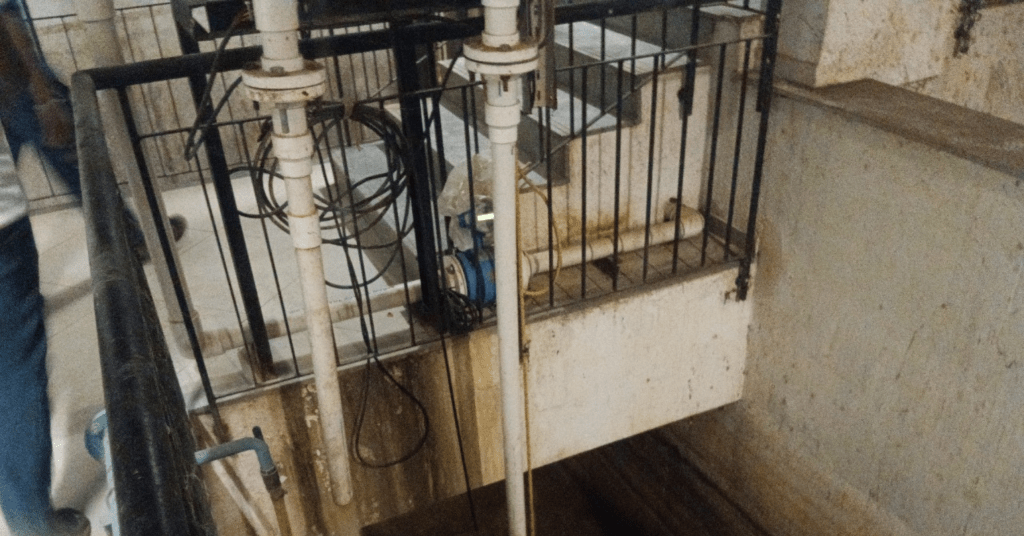
Sensors are mandatory for all STPs (including residential ones) for parameters like pH, Total Suspended Solids, BOD, COD, and Flow. Online monitoring must strictly comply with CPCB specifications to ensure continuous Sewage Treatment Plant compliance Bangalore.
Usage of Treated Sewage:
- Mandatorily, the treated sewage shall be used for toilet flushing with a dual plumbing system. An Ultrafiltration System is mandatory for this reuse.
- It can also be used for gardening, lawn maintenance, and landscaping.
- It can be used for certain construction activities (curing, dust suppression, road consolidation, brick work), avoiding contact with steel, pending a study report from IISc.
- UV System or Ozonation is recommended for Faecal Coliform Control before reuse.
Safety:
A ‘DANGER’ sign board must be provided near the STP for operational personnel’s safety.
Signages saying “not fit for drinking” shall be displayed in both Kannada and English at taps where treated sewage flows.
When maintenance staff enter confined spaces like basements, caution signs must be put up. Due to potential hazardous gases, personnel must enter with all protective equipment, including an Oxygen portable cylinder with a mask. Two other persons must be watching from outside and ready to evacuate the person inside. A minimum of two sets of such protective gear shall always be kept available in a working condition.
Modular-Based Approach:
For large projects (which could include phased apartment complexes) where initial occupancy is minimal, the design and execution shall be on a modular basis so that the STP can be made operational during the lean occupancy as well.
Plan Sanctions:
The approved Plan sanction shall include the location of the STP as per the guidelines of KSPCB. These measures are essential for maintaining Sewage Treatment Plant compliance Bangalore and safeguarding environmental standards.
Adhering to Sewage Treatment Plant compliance Bangalore as per KSPCB 2021 guidelines is crucial for apartment complexes to ensure environmental sustainability and safeguard public health. However, compliance is only as good as the implementation and ongoing monitoring. This is why incorporating comprehensive RWA Handover-Takeover (HOTO) audits during the handover phase is indispensable. These audits provide RWAs with the confidence that their STP systems meet regulatory standards, operate efficiently, and protect the community from pollution risks.
By integrating technical STP compliance with effective RWA HOTO audits, apartment complexes in Bangalore can achieve long-term sustainable wastewater management and contribute positively to the city’s ecological balance.